Yield Curves and the Term Structure
How nominal and real rates, yield-curve shape, and the main term-structure theories explain bond pricing across maturities.
The term structure of interest rates explains why otherwise similar bonds can trade at different yields simply because their maturities differ. Once those yields are plotted, the result is a yield curve.
CSC questions often test interpretation more than calculation here. Students need to recognize what a curve shape may imply, how nominal and real rates differ, and why no single theory explains every movement in the curve.
What the Term Structure Measures
The term structure of interest rates is the relationship between yield and time to maturity for bonds of similar credit quality at a single point in time.
The most common reference curve in Canadian fixed income is built from Government of Canada securities because they provide a high-quality benchmark across different maturities.
Students should keep one distinction clear:
- the term structure is about maturity and yield
- a credit spread is about extra yield for extra credit risk
Those two ideas interact, but they are not the same.
Nominal Rates, Real Rates, and Inflation Expectations
Bond yields are usually quoted as nominal yields. A nominal yield includes compensation for:
- the real time value of money
- expected inflation
- any extra premia for term, liquidity, or risk
The real rate of return is the return after inflation is considered. In plain language:
- nominal return tells the investor how many dollars are earned
- real return tells the investor how much purchasing power is gained
If inflation expectations rise while real required return stays constant, nominal yields may still rise.
This matters because the yield curve is never only about central-bank policy. Inflation expectations also shape it.
Reading the Yield Curve
Plotting yields by maturity creates a yield curve. Several common shapes appear in exam questions.
Normal or Upward-Sloping Curve
Longer maturities have higher yields than shorter maturities. This often reflects a mix of:
- expected future short-rate increases
- inflation uncertainty
- term premium for lending longer
Flat Curve
Yields across maturities are similar. A flat curve often appears when the market is between regimes and is uncertain about the next policy or growth direction.
Inverted Curve
Short-term yields are above long-term yields. This can reflect expectations of slower future growth, lower inflation, or future policy easing.
Humped Curve
Intermediate maturities yield more than both the short and long ends. This is less common, but it can appear when markets expect a transitional period rather than a single clear long-term path.
The visual shape matters here, so an SVG is more useful than a flowchart.
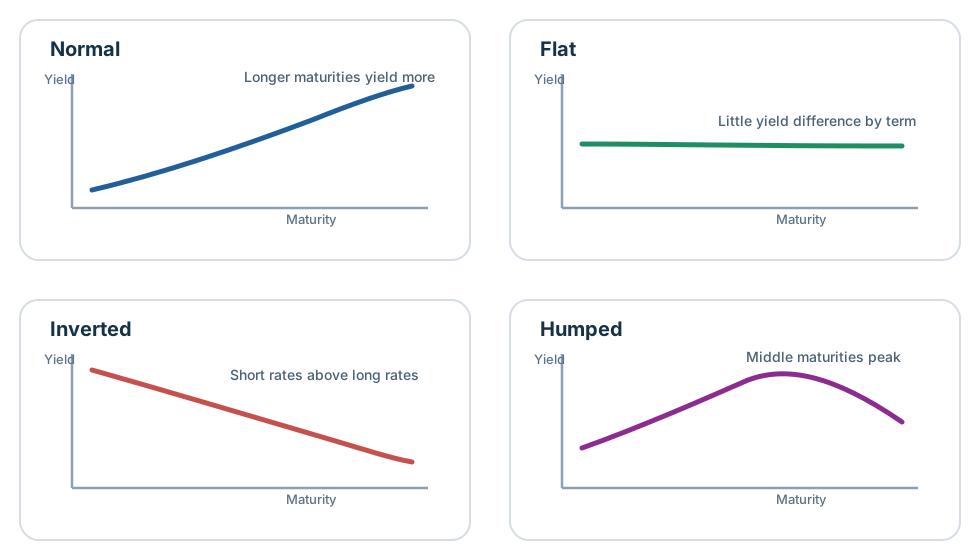
Read the figure as a geometry reference, not as a forecast tool. The exam value is being able to recognize what changes from one curve to another and then connect that shape to inflation expectations, future short-rate expectations, and term premium.
Three Core Theories of the Term Structure
The textbook theories help explain why the curve takes a particular shape.
Expectations Theory
This theory says longer-term yields largely reflect the market’s expectations for future short-term rates. If investors expect short rates to fall later, long yields may stay below current short yields.
Liquidity Preference Theory
Investors often prefer shorter maturities because they carry less price volatility and less term uncertainty. Under this view, long-term yields usually include an added premium to compensate investors for holding longer maturities.
Market Segmentation Theory
Different investor groups may prefer specific maturity ranges for liability-matching, regulation, or mandate reasons. If supply and demand become unbalanced in one maturity segment, that part of the curve can move differently from the rest.
The exam does not require philosophical loyalty to one theory. The safer conclusion is that expectations, term premium, and maturity-specific supply-demand forces can all matter at the same time.
Interpreting the Curve Without Overreading It
Yield curves are useful signals, but they are not guarantees.
- an inverted curve may signal recession risk, but it does not guarantee recession
- a steep curve may reflect optimism, but it may also reflect inflation concern or a term premium
- a higher corporate yield may reflect credit spread rather than a change in the Government of Canada curve
Students should interpret the curve as evidence, not as certainty.
Why the Curve Matters to Investors
The curve affects several decisions:
- whether to extend or shorten portfolio maturity
- how attractive a yield pickup is at longer maturities
- how to compare nominal and real return expectations
- how to separate maturity effects from credit effects
For example, a portfolio manager considering a move from short-term to long-term bonds must ask whether the extra yield reflects attractive compensation or simply more interest-rate risk.
Key Terms
- Term structure: Relationship between yield and maturity for similar-quality bonds.
- Yield curve: Graph of yields across maturities.
- Nominal rate: Quoted rate before adjusting for inflation.
- Real rate: Return after adjusting for inflation.
- Term premium: Extra yield investors may demand for committing money over a longer horizon.
Common Pitfalls
- Confusing credit spread with yield-curve shape.
- Assuming an inverted curve guarantees recession.
- Ignoring inflation expectations when thinking about nominal yields.
- Treating one theory as a complete explanation of every curve move.
- Comparing curves built from different credit-quality groups without noticing it.
Key Takeaways
- The term structure compares yield with maturity for similar-quality bonds.
- Yield curves can be normal, flat, inverted, or humped.
- Nominal yields reflect inflation expectations as well as real required return.
- Expectations, liquidity preference, and market segmentation all help explain curve shape.
- Curve interpretation is useful only when it is kept separate from credit-spread analysis.
Quiz
Sample Exam Question
A portfolio manager observes that long-term Government of Canada bonds yield more than short-term Government of Canada bonds even though many investors currently expect policy rates to stay roughly unchanged for a while. The manager says the extra long-end yield may still be rational because investors often require additional compensation for holding longer maturities.
Which theory best fits the manager’s explanation?
- A. Market segmentation theory only
- B. Liquidity preference theory
- C. Clean-price theory
- D. Current-yield theory
Correct answer: B.
Explanation: Liquidity preference theory says investors generally demand extra compensation for taking longer-term exposure because it carries more price volatility and term uncertainty. Market segmentation may also matter in practice, but the manager’s specific explanation is the liquidity-premium idea.